
Popped ears stopping you from sleeping on a flight? Find out how to combat the issue with some easy tips and quick hints. Click here for more information here.
Keep Your Bedroom Dark For An Improved Night’s Sleep
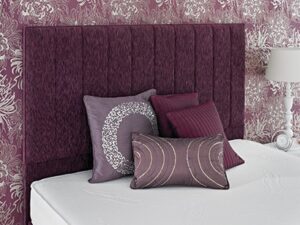 Keep it dark
One of the most important features of your bedroom that’s conducive to a good night’s sleep is that it should be dark. This is because the all-important sleep-inducing hormone melatonin is extremely light-sensitive, and may not be produced optimally unless it’s completely dark.
City dwellers in particular have become accustomed to light pollution, and are often unaware that health issues can arise from bright lights inside and outside the home late at night. Electric lights have contributed to disrupting the body clock as bright lights signal to the brain that it’s time for wakefulness and activity.
Conduct A Bedroom Light Audit
One way to discover if there’s too much light in your bedroom is to perform a simple light audit:
- Turn out all the lights in your bedroom at night
- Allow your eyes to adjust for a few minutes
- Check to see if you can identify objects and check for ‘light leaks’.
Lightproof Your Room
If you can identify objects and see light streaming in from an outside source, you’ll need to ‘light proof’ your room. You can do this by applying blackout lining to your curtains to keep out light from outside, and avoiding all LED lights from electrical devices such as phones and clocks. If you keep your bedroom door open, switch off other lights in the house that may stream light into your room. Keep in mind that reducing the amount of light will help but it is better to try to eliminate it as much as possible.
Another simple and much cheaper solution is to purchase a sleep mask. A good quality sleep mask is light and comfortable and yet thick enough in the front panel to block out all light. A small flap of material at the bottom of the mask around that area of the nose is also necessary to block out light.
Suppress The Melatonin
If you have to get up during the night, try not to turn on the light. The reason is that even a small amount of light can be enough to suppress the melatonin production for that night. Blue wavelength light in the light spectrum of household bulbs, is the light that specifically suppresses melatonin. This makes sense in light of the fact that during the day there is a lot of blue light, which basically tells the brain and the body that it’s daytime. If you’re worried about bumping into things if you do need to get up during the night, a solution is to use a red light bulb in a small night light that can be used to show you the door, landing or stairs if you have to get up during the night.
For more information on sleep download the FREE Sleep Guide
Related Posts


